What Is a Conversion Funnel? A Beginner’s Guide

Jan van Dijk
February 10, 2026 · 8 min read
When I first started consulting for small e-commerce shops in Amsterdam, I kept hearing the same complaint: “We get plenty of visitors, but nobody buys anything.” The website owners were frustrated. They were spending money on ads, posting on social media, and writing blog posts — but their sales numbers stayed flat.
The problem, almost every time, was that they had no idea how visitors moved through their website before making a purchase. They were missing a conversion funnel.
In this guide, I will explain what a conversion funnel is, walk you through its four main stages, and show you how to build one for your own website. No jargon, no complicated theory — just practical advice that actually works.
What Is a Conversion Funnel?
A conversion funnel is a model that describes the journey a person takes from first hearing about your product or service to actually completing a desired action — like making a purchase, signing up for a newsletter, or downloading an app.
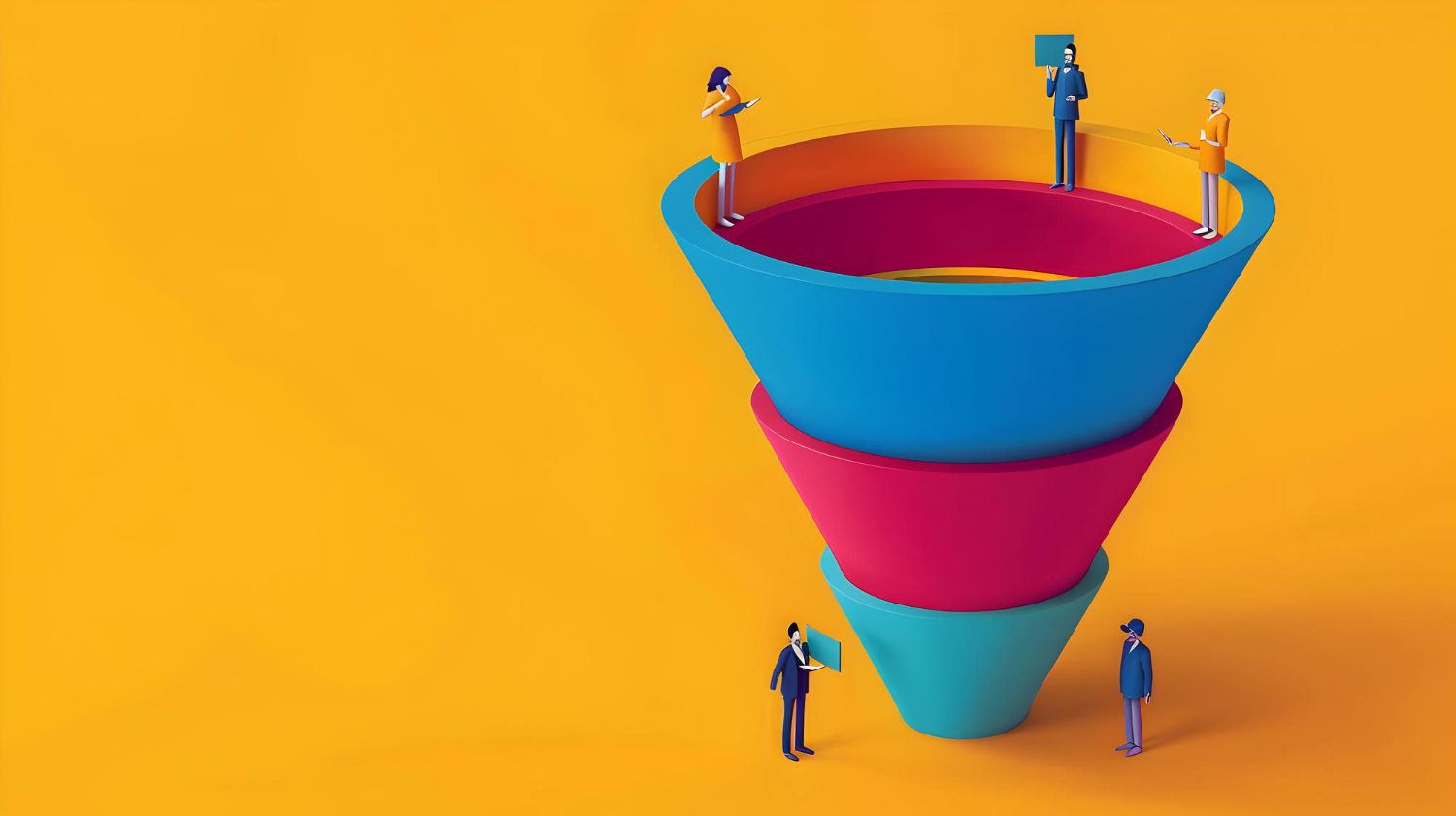
It is called a “funnel” because it is wide at the top and narrow at the bottom. Many people enter the top of the funnel, but only a fraction of them make it all the way through. At each stage, some people drop off. That is completely normal.
Think of it like a real kitchen funnel. You pour a lot of liquid in at the top, and a smaller, concentrated stream comes out at the bottom. The same thing happens with your website visitors.
According to Wikipedia’s overview of the purchase funnel, this concept has been around since 1898, when advertiser Elias St. Elmo Lewis first described the customer journey as a series of steps. The idea has evolved over the years, but the core principle remains the same.
The Four Stages of a Conversion Funnel
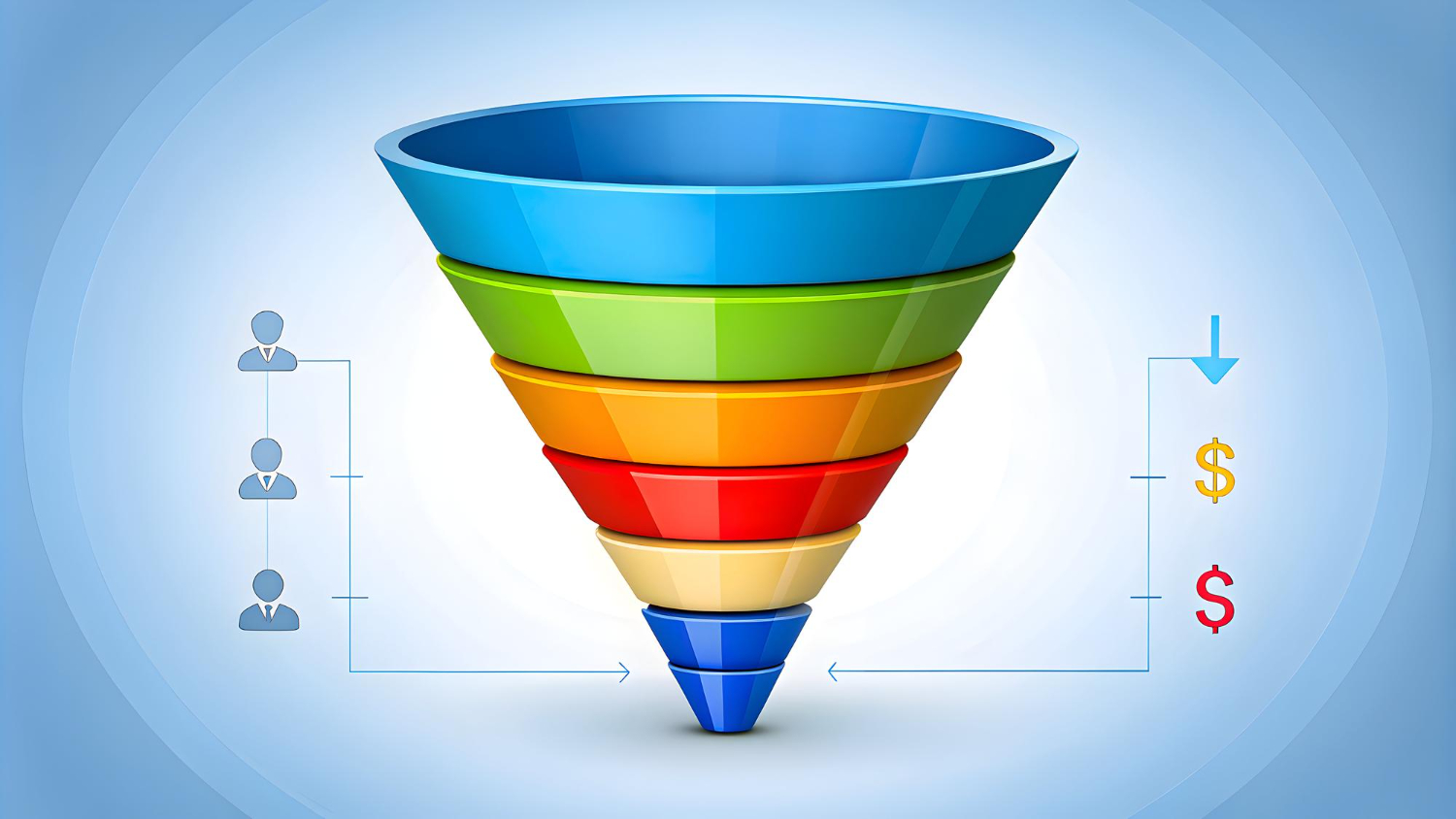
Most conversion funnels follow four stages, often remembered by the acronym AIDA: Awareness, Interest, Decision, and Action. Let me break each one down with real examples.
Stage 1: Awareness
This is the very top of the funnel. At this stage, a potential customer discovers that your business exists. They might find you through:
- A Google search result
- A social media post
- A paid advertisement
- A recommendation from a friend
- A blog article (like this one)
The goal at this stage is simple: get noticed. You are not trying to sell anything yet. You are just introducing yourself.
Example: Someone searches “how to track marketing campaigns” on Google and lands on your article about UTM parameters. They have never heard of your brand before, but now they know you exist.
To measure awareness, look at metrics like total website visits, social media reach, and impressions. If you use Google Analytics, the acquisition reports show you exactly where your visitors come from.
Stage 2: Interest
Once someone knows about you, the next step is to keep their attention. At the interest stage, visitors start exploring your website. They read more articles, check out your product pages, or browse your pricing.
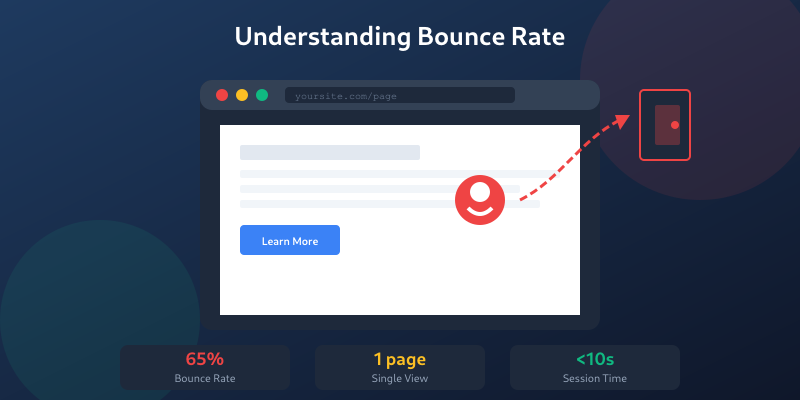
The key metric here is engagement. Are people spending time on your site, or are they leaving immediately? If your bounce rate is very high, it means most visitors leave without exploring further — a clear sign that the interest stage needs work.
Example: A visitor who found your UTM article now clicks through to your UTM Builder tool and bookmarks it. They are showing genuine interest in what you offer.
From my own experience working with clients, the interest stage is where most funnels leak. People visit one page and leave. The fix is usually better internal linking, clearer calls to action, and content that answers the visitor’s next logical question.
Stage 3: Decision
At this stage, the visitor is seriously considering taking action. They might be comparing you to competitors, reading reviews, or looking at your pricing page for the third time.
Your job is to make the decision easy. Remove friction. Answer objections. Provide social proof like testimonials, case studies, or trust badges.
Example (e-commerce): A shopper adds a pair of shoes to their cart, reads three customer reviews, and checks your return policy. They are in the decision stage.
Example (SaaS): A marketing manager signs up for a free trial of your analytics tool, watches a demo video, and asks a question through live chat. They are deciding whether to upgrade to a paid plan.
Stage 4: Action
This is the bottom of the funnel — the moment someone completes the conversion. Depending on your business, “action” could mean:
- Making a purchase
- Submitting a contact form
- Signing up for a paid subscription
- Downloading an ebook
- Creating an account
But here is something many beginners miss: the funnel does not end at the sale. The best businesses add a fifth unofficial stage — retention. Keeping existing customers is almost always cheaper than finding new ones.
How to Build a Conversion Funnel for Your Website
Now that you understand the stages, let me show you how to set one up. I have done this dozens of times for clients, and the process is simpler than you might think.
Step 1: Define Your Conversion Goal
Before you build anything, decide what “conversion” means for your website. Be specific. “Get more sales” is too vague. Instead, try something like:
- “Increase completed checkouts by 15% this quarter”
- “Get 200 newsletter signups per month”
- “Generate 50 demo requests per month”
Step 2: Map Out the Customer Journey
Write down every step a visitor takes from first arriving on your site to completing the conversion. For a typical e-commerce store, it might look like this:
Landing Page → Category Page → Product Page → Add to Cart → Checkout → PurchaseFor a SaaS company, it could be:
Blog Post → Features Page → Pricing Page → Free Trial Signup → Onboarding → Paid SubscriptionWrite each step down. This is your funnel.
Step 3: Set Up Tracking
You need data to understand where people drop off. Google Analytics 4 (GA4) lets you create funnel explorations that show exactly how many people move from one step to the next.
Make sure you are tagging your marketing campaigns with UTM parameters so you can see which traffic sources feed into the top of your funnel. Our free UTM Builder makes this quick and painless.
Step 4: Identify Drop-Off Points
Once you have data flowing in, look for the biggest drop-offs. In my consulting work, I see a few common patterns:
- Awareness to Interest: High bounce rate on landing pages (fix: better headlines, faster load times)
- Interest to Decision: Visitors browse but never reach the pricing or product page (fix: clearer navigation, stronger CTAs)
- Decision to Action: Cart abandonment or form dropoff (fix: simplify checkout, add trust signals)
Step 5: Optimize and Test
Fix the biggest leak first. Then test your changes. A simple A/B test — showing half your visitors one version of a page and the other half a different version — can tell you whether your changes actually help. For landing page copy, use our word counter to keep text concise and focused.
Repeat this process continuously. A conversion funnel is never “done.” Even a small improvement at each stage can have a big cumulative effect on your bottom line.
Common Conversion Funnel Mistakes
Over the years, I have seen businesses make the same mistakes again and again. Here are the ones to avoid:
1. Skipping the Middle of the Funnel
Many businesses focus all their energy on getting traffic (top of funnel) and closing sales (bottom of funnel), but ignore the interest and decision stages. This creates a leaky funnel where visitors arrive but never convert.
2. Having Too Many Steps
Every extra step in your funnel is another chance for someone to leave. I once worked with a client whose checkout process had seven pages. We reduced it to three, and their conversion rate jumped by 28%.
3. Not Tracking the Right Metrics
Vanity metrics like total page views can be misleading. Focus on conversion rate at each stage instead. If 1,000 people visit your product page but only 10 add something to the cart, your product page has a 1% conversion rate — and that tells you exactly where to focus your effort.
4. Ignoring Mobile Users
According to Statista, more than half of all web traffic now comes from mobile devices. If your funnel works great on desktop but is clunky on a phone, you are losing a huge chunk of potential customers.
5. Using the Same Message for Everyone
Someone at the awareness stage needs educational content. Someone at the decision stage needs a compelling offer. Sending the same message to both groups does not work. Tailor your content to each stage of the funnel.
A Real-World Example: How I Fixed a Leaky Funnel
Let me share a quick story from my own experience. A few years ago, a small online store selling handmade candles came to me for help. They had around 5,000 monthly visitors but only about 15 orders per month — a conversion rate of just 0.3%.
When I mapped their funnel, the problem became obvious:
- Awareness: 5,000 visitors per month (fine)
- Interest: Only 800 viewed a product page (84% drop-off)
- Decision: Only 120 added to cart (85% drop-off)
- Action: Only 15 completed checkout (87.5% drop-off)
The biggest leak was between awareness and interest. Most visitors landed on the homepage and left. We redesigned the homepage to feature bestselling products with clear images and added a “Shop by scent” section. Product page views jumped to 2,100 per month.
Next, we added customer reviews and a money-back guarantee badge to product pages. Cart additions rose to 380. Finally, we simplified checkout from five steps to two and added PayPal as a payment option. Monthly orders increased to 68 — more than four times the original number.
The whole process took about six weeks and did not require any expensive tools. Just clear data, a logical funnel, and targeted fixes.
Frequently Asked Questions
What is the difference between a conversion funnel and a sales funnel?
The terms are often used interchangeably. A sales funnel specifically focuses on the process of turning a lead into a paying customer. A conversion funnel is a broader term that can apply to any desired action — like signing up for a newsletter, downloading an app, or filling out a form. In practice, most marketers mean the same thing when they use either term.
How do I calculate my funnel conversion rate?
Divide the number of people who complete the final action by the number who entered the funnel, then multiply by 100. For example, if 2,000 people visit your landing page and 40 make a purchase, your overall funnel conversion rate is (40 / 2,000) x 100 = 2%. You can also calculate the conversion rate between individual stages to find where people drop off.
What is a good conversion rate for a funnel?
It depends on your industry and what you are measuring. For e-commerce, an overall funnel conversion rate of 1% to 3% is considered average. For lead generation (like form submissions), 3% to 5% is typical. But the “right” number varies widely. The most important thing is to track your own rate over time and work on improving it, rather than comparing yourself to industry averages.
Do I need special software to create a conversion funnel?
No. You can start with free tools. Google Analytics 4 has built-in funnel exploration reports that let you visualize each step. For tracking which marketing channels feed your funnel, use UTM parameters (our free UTM Builder can help). As your needs grow, you might explore dedicated tools like Hotjar for heatmaps or Mixpanel for advanced funnel analytics, but they are not required to get started.
Written by Jan van Dijk
Independent web analyst from Amsterdam. I help small businesses understand their data and build tools that make everyday web tasks easier.
More about me